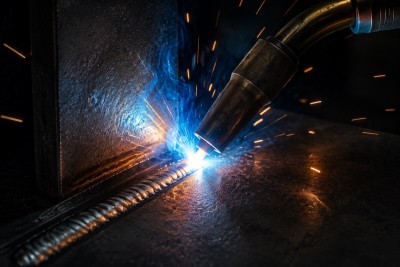
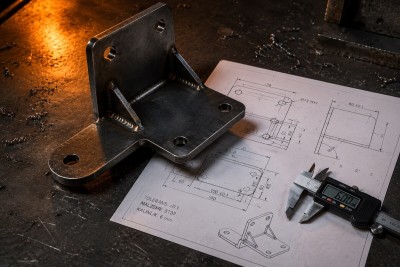
Fiber Laser Cutting
Fiber Laser Cutting
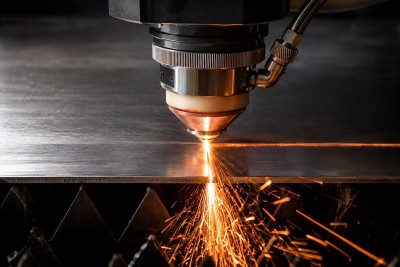
High Precision, Low Tolerance
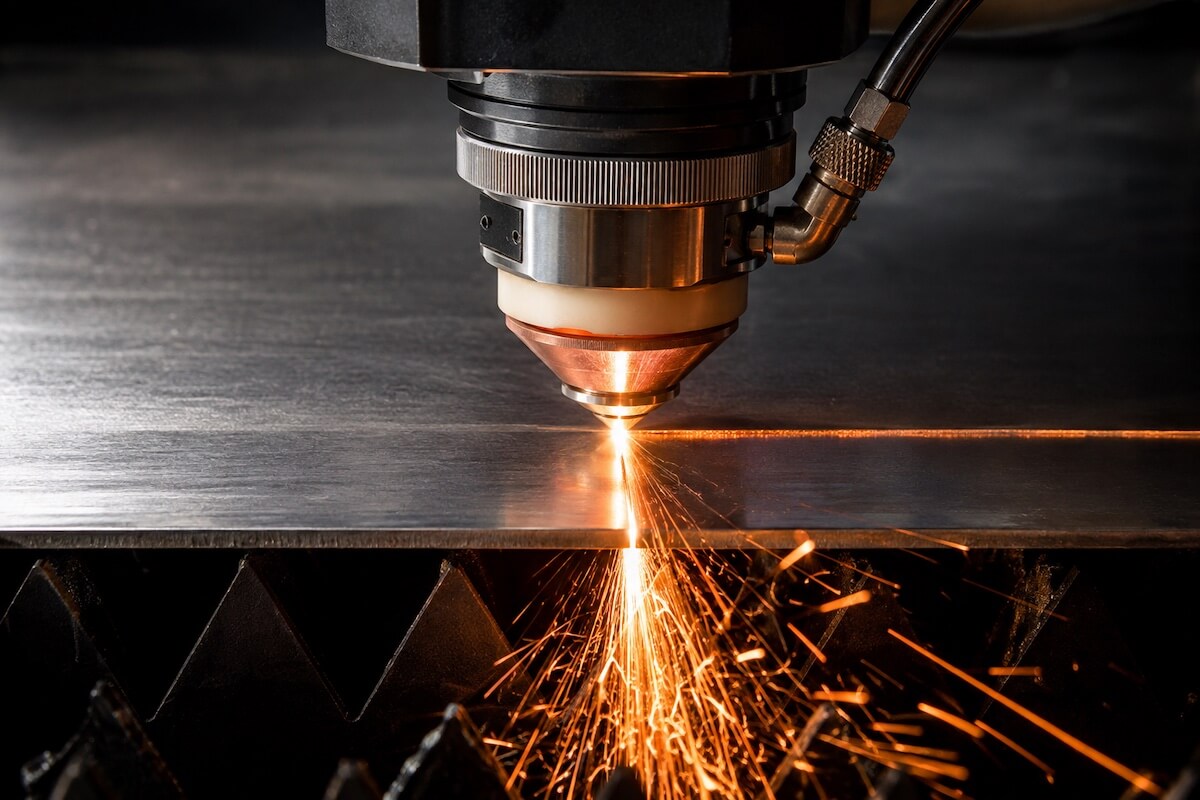
Precise contract cutting of sheet metal, pipe and profile with fiber laser. Complex geometries are processed with minimum tolerance, from a single part to serial production.
More
Punch Press
Punch Press
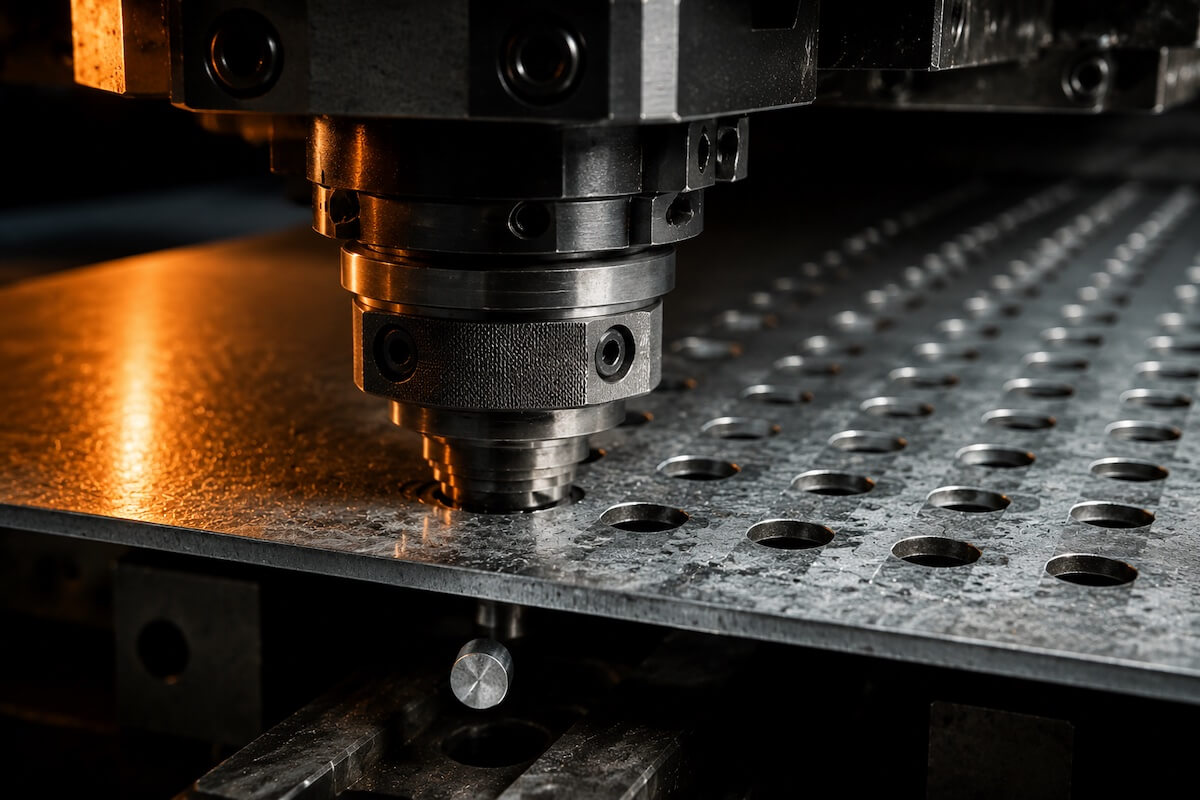
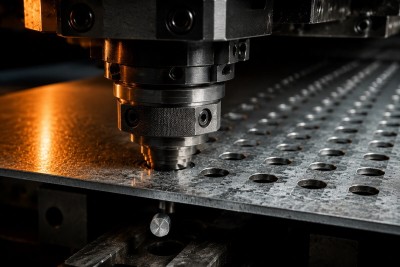
Serial Punching and Forming
Speed and unit cost advantage in repetitive hole and form operations. Die grinding service is also available for the maintenance of your own dies.
More
Fiber Laser Cutting
Punch Press
Depota Raf
From Your Drawing to the Finished Part

Contract Sheet Metal Processing: Laser Cutting, Bending and Welded Manufacturing

We bring fiber laser cutting, punch press, press brake bending and MIG/MAG welding under one roof at our facility in Ankara. Send us your drawing and receive the part with cutting, bending and welding completed.
We work with DXF or DWG files; a dimensioned PDF technical drawing is also sufficient. For jobs without a drawing, we take measurements from a sample part and prepare the drawing ourselves. Cutting, bending, welding and pre-paint preparation all run under one roof at our 3,500 m² facility in Kahramankazan, Ankara. Because the part never travels between workshops, lead times shorten, the risk of dimensional deviation drops and you have a single point of contact throughout.

We accept work at every scale, from a single sample part to serial production; after sample approval, production continues with the same settings and dimensional consistency is preserved. You are backed by an ISO 9001 certified production infrastructure that has been manufacturing in its own facility since 2006. We work with machine manufacturers, furniture and interior producers, electrical panel builders and defence industry subcontractors.

Our Services

Cutting, punching, bending and welding under one roof. If you are unsure which method your part needs, send us your drawing and we will determine the most suitable route together.
Laser Cutting

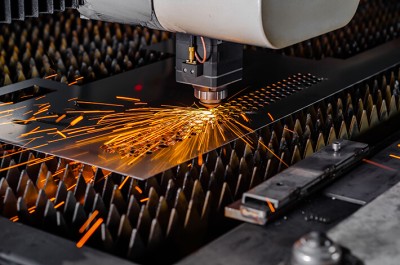
In our laser cutting category, we offer professional cutting solutions with high precision and low tolerances in different materials such as sheet metal, pipes and profiles.
More
Laser Cutting

Punch Press

We offer high precision drilling, shaping and die grinding solutions for your sheet metal processing processes.
More
Punch Press

Press Brake Bending

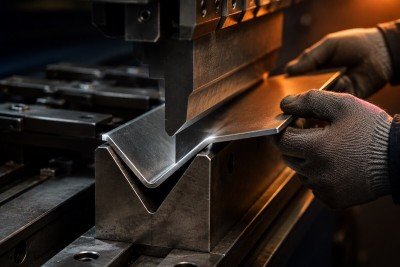
We apply precise-angle bending to sheet metal parts on our press brakes; parts we cut are bent in the same facility.
More
Press Brake Bending

MIG/MAG Welding

Joining and complete welded manufacturing with MIG/MAG welding; assembly after cutting and bending is completed in a single facility.
More
MIG/MAG Welding

Sheet Metal Processing

A contract sheet metal processing facility bringing laser cutting, punch press, press brake bending and MIG/MAG welding under one roof.
More
Sheet Metal Processing

Why Depota?

You are working with a metal processing company that has been manufacturing in its own facility since 2006.


01

Our Own Production Infrastructure

We have been manufacturing since 2006. We work with our own machine park in a 3,500 m² covered facility and do not subcontract the work.
02

One Roof, One Process

Cutting, bending and welding in the same facility. You work with a single point of contact and shorter lead times instead of juggling three suppliers.
03

From Sample to Serial Production

ISO 9001 certified production with a track record in defence industry and corporate projects. After single-part sample approval, serial production continues with the same settings.
NÜFUS VE VATANDAŞLIK HİZMETLERİ
DEVLET DEMİRYOLLARI
TEİ
IVECO
MEDİAMARKT
ARÇELİK
TÜRK TRAKTÖR
TAİ
MERCEDES BENZ
OYAK ÇİMENTO

Frequently Asked Questions

The most common questions about materials and thickness ranges, file formats, minimum quantities and lead times. If you cannot find your answer, write to us through the quote form.

With fiber laser we cut mild steel, DKP, stainless steel, galvanised sheet and aluminium. The achievable thickness varies by material; it goes higher in mild steel, while the limit arrives earlier in stainless and aluminium because those materials cut more slowly at the same thickness. Our technical team confirms the suitable thickness range and cutting tolerance for your project from your drawing. For detailed capacity information see our fiber laser cutting page.
Laser cutting offers flexibility for free-form, complex geometries and low quantities; because it needs no die, it is economical even for a single part. Punch press provides speed and unit cost advantage where the same hole or form repeats many times in high volume; once the die is ready, cost drops quickly. Punch press can also produce forms such as embossing, countersinking and louvres in a single stroke — laser cannot. Most projects use both; our punch press page explains which method comes out ahead for which job.
Our press brakes apply precise-angle bending to sheet metal parts; mild steel, DKP, stainless, galvanised and aluminium can be bent. Because parts we cut are bent in the same facility, the part never travels between workshops and the risk of dimensional deviation drops. Request a quote with your technical drawing for maximum bending length and tonnage capacity. You can find the process in detail on our press brake bending page.
MIG/MAG welding is used for joining mild steel, structural steel and general manufacturing steels. The MAG method uses active gas for manufacturing steels, while MIG uses inert gas and is preferred for aluminium and its alloys. In addition to standalone welding jobs, we also carry out complete welded manufacturing after cutting and bending. See our MIG/MAG welding page for applications and process.
Yes. Cutting, bending and welding can be ordered separately; send parts you had cut elsewhere with their technical drawing and we will apply bending only, or welding only. The same work can also be run as complete contract manufacturing from drawing to finished part. Most of our customers prefer this because taking the whole chain from one supplier removes the responsibility dispute that arises when parts do not fit each other. See our sheet metal processing services page for the full process.
We have no minimum quantity requirement. Because laser cutting needs no die, a single sample part is economical too, so we accept work at every scale from one part to serial production. After sample approval, production continues with the same settings and dimensional consistency is preserved. For high volumes we also assess whether punch press would be more economical and let you know.
DXF and DWG are preferred; a dimensioned PDF technical drawing also works, although the process takes a little longer because the geometry has to be redrawn. For jobs without a drawing we take measurements from a sample part, prepare the drawing ourselves and submit it for your approval before production. Closed contours, 1:1 scale and millimetre units in your file ensure the job goes into production first time.
Die grinding covers the maintenance and sharpening of punch press dies. A worn die leaves burr and lowers cut quality; regular grinding both extends die life and preserves consistency between parts. You can send your own die and take maintenance as a standalone service. For the die diameter range and process details see our punch press and die grinding page.
You send your drawing, the material type and thickness, and the quantity via the contact form or e-mail. Our technical team checks the file, suggests a more economical production route where relevant, and prepares your quote covering material, labour and lead time shortly after. For complex projects a technical discussion is held before quoting.
Our production facility is in Kahramankazan, Ankara, and we ship throughout Türkiye. Shipping is planned according to order volume, part dimensions and distance during the quotation stage. For high-volume work the transport cost is added to the quote as a separate item, so you see the total cost from the start.

Yes. Alongside our sheet laser we also have pipe and profile laser systems. Round pipe, box profile, rectangular tube and angled profiles can be cut, as well as rolled profiles such as UNP, INP and angle iron. Mitre and angled cuts frequently needed in structural and chassis work are also produced. We confirm the suitability of your section from your technical drawing; for details see our laser cutting page.

The flat pattern, bend allowance and bending sequence are calculated by us; sending a dimensioned drawing of the finished part is enough. There is a technical reason: the flat pattern depends on the behaviour of the machine and tooling used, and a part cut to a different calculation can deviate by a few tenths of a millimetre on our press brake. This is why having cutting and bending in the same facility is decisive for dimensional consistency. If the flat pattern is already given in your drawing we check it before production — we cover this in detail on our press brake bending page.

Welding heat pulls the sheet; in thin material and long structural work this distortion becomes visible to the eye. To keep it under control, beads are laid in sequence and symmetrically, intermittent beads are used instead of continuous ones where strength allows, and the part is cooled while held in a fixture. In repeat work the fixture holds parts in the same position every time, reducing both distortion and assembly time.

Both are possible. You can have us take on material supply, or send your own sheet and take labour only. When we supply, the material is added to the quote as a separate item at market price; when you send your own sheet, the quote covers labour only. We assess together which route suits you better depending on quantity and material type.

Lead time varies with the scope of the job, the number of operations and the production quantity. A job that only involves cutting and one where cutting, bending and welding run together are not completed in the same time. Sample and single-part work is delivered noticeably faster than serial orders. Running every step in the same facility is the main factor that shortens lead time, because the part never travels between workshops. The exact lead time is committed at the quotation stage once your drawing has been reviewed — take a look at our sheet metal processing workflow.

First a single sample part is produced and put through dimensional inspection against the technical drawing. Once the first part is approved, serial production continues with the same machine settings; because the cutting program, bending sequence and welding plan do not change, no variation builds up between parts. This step is the only practical safeguard against discovering, after 500 parts, that all of them are faulty. Intermediate and final inspections are also applied in serial work.

Yes. Stainless steel and aluminium are among the materials we work with, both in cutting and in bending. In these materials fiber laser leaves a cleaner cut surface than in mild steel; on the other hand they cut more slowly at the same thickness and the maximum thickness limit arrives earlier. In aluminium the rolling direction is taken into account to reduce the risk of cracking during bending.

Control starts before welding: the dimensions of cut and bent parts are compared against the technical drawing, and any part outside tolerance is not taken to assembly. After the parts are temporarily joined with tack welds, dimensions are taken again; if there is deviation it is addressed at this stage, because correcting after welding is complete is far harder. Once welding is finished, distances between hole centres, squareness and flatness go through a final check against the technical drawing. For the detailed process see our MIG/MAG welding page.

Weld cleaning before delivery is standard: spatter is removed and grinding is applied where required. Surface preparation before painting is assessed according to the scope of the job and discussed separately at the quotation stage. Telling us up front that the part will be painted makes our work easier, because the shape of the weld bead and the level of cleaning are planned accordingly.

Whether a dimension that holds on one part also holds on five hundred depends on the machines being CNC controlled and on the first part approval process. On the bending side, once the angle and flange length are verified on the sample part, production continues with the same settings so no angle variation builds up between parts. In cutting, once the program is verified every part comes out with the same geometry. In repeat work the use of a fixture also removes differences at the assembly stage.

What you need to know about sheet metal processing

Technical articles on laser cutting, punch press, press brake bending and MIG/MAG welding; practical guidance on method selection, drawing preparation and cost.

Quality Control in Welded Manufacturing

In welded manufacturing, quality cannot be judged by looking at the weld bead. Whether the part comes out to the dimensions on the technical drawing depends on the steps before…

How to Prepare a DXF File: Drawing Guide for Contract Cutting

In contract cutting, most delays come not from the machine but from the file. An open contour, two overlapping lines or a drawing at the wrong scale sends the job…

What Is MIG/MAG Welding and Where Is It Used?

MIG/MAG welding is a method in which a continuously fed wire electrode melts to make the join, while the weld pool is insulated from the air by a shielding gas…

Laser Cutting or Punch Press? Choosing the Right Method

In sheet metal work it is often possible to produce the same part by two different methods. Which one is right depends not on the part itself but on its…

What Is Press Brake Bending? Bend Allowance and Flat Pattern

Press brake bending is the operation in which a flat sheet is bent under control on a press brake, between an upper punch and a lower die with a V…

What Determines Contract Laser Cutting Prices?

The first question most companies ask when requesting a contract laser cutting quote is the same: "How much per square metre?" There is no single answer, because laser cutting is…

Punch Press and Die Grinding Services

In a period when competition in industrial production is increasing, speed, precision and quality in the production line are no longer just a choice, they have become a necessity. Sheet…

What is Laser Cutting? Advantages and Areas of Use

Laser cutting is a production method that uses concentrated light energy to cut materials with high precision. This technology has become indispensable in many industries today. Especially in the metal…